ARTISTS I LOVE: HUGH HAYDEN
3 MIN READ
II first encountered American artist Hugh Hayden's work at one of my yearly pilgrimages to Art Basel. In a fair filled with visual noise, the power of his sculptures immediately caught my attention.
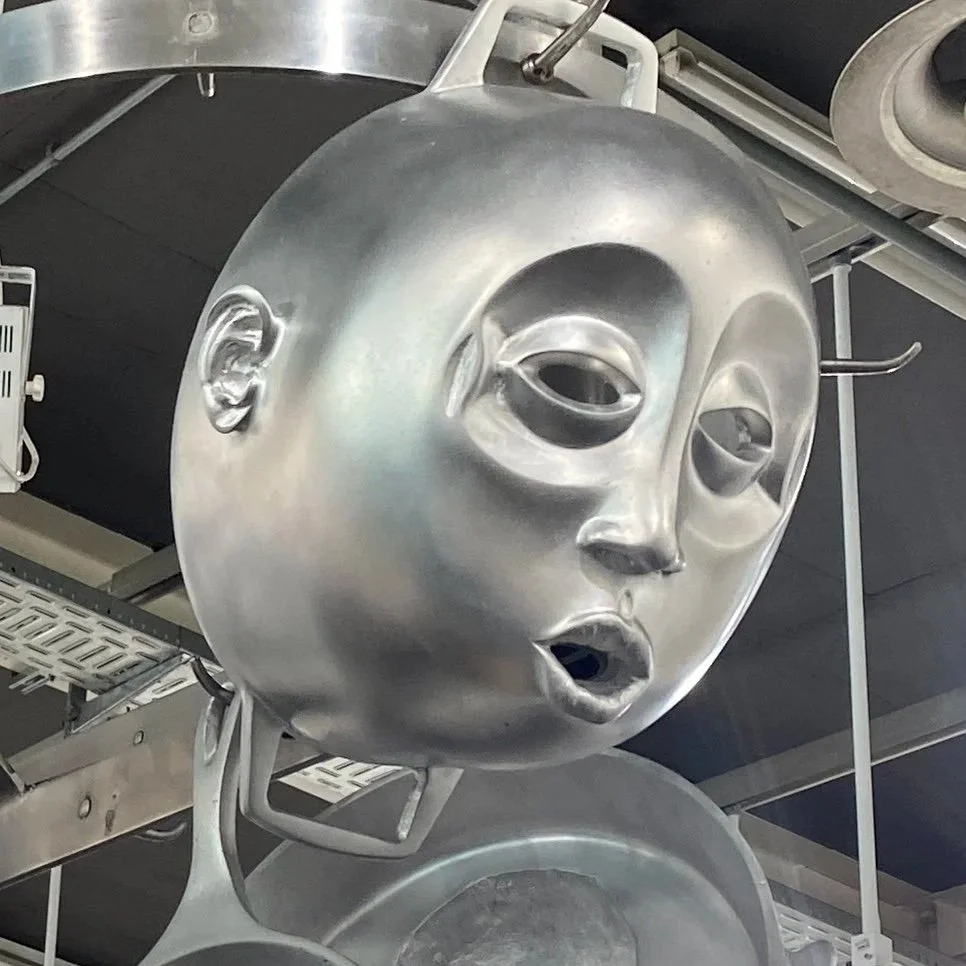
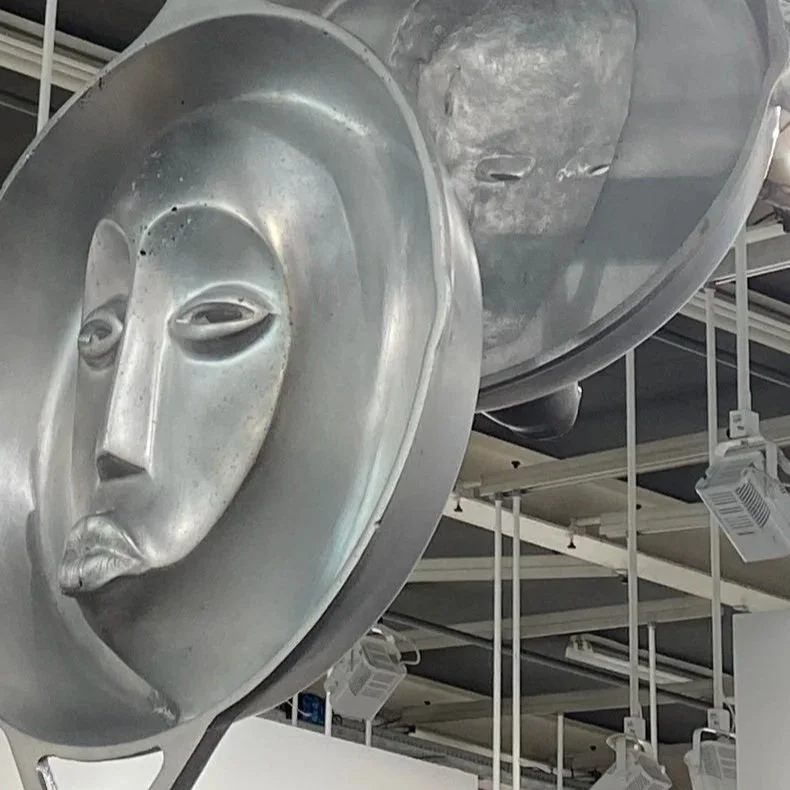
The pieces were suspended from the ceiling were large metal pans transformed into faces reminiscent of African masks. The polished surfaces reflected the gallery lights while the faces seemed to float above me. I had never seen anything quite like them. The work felt modern and inherited at the same time.
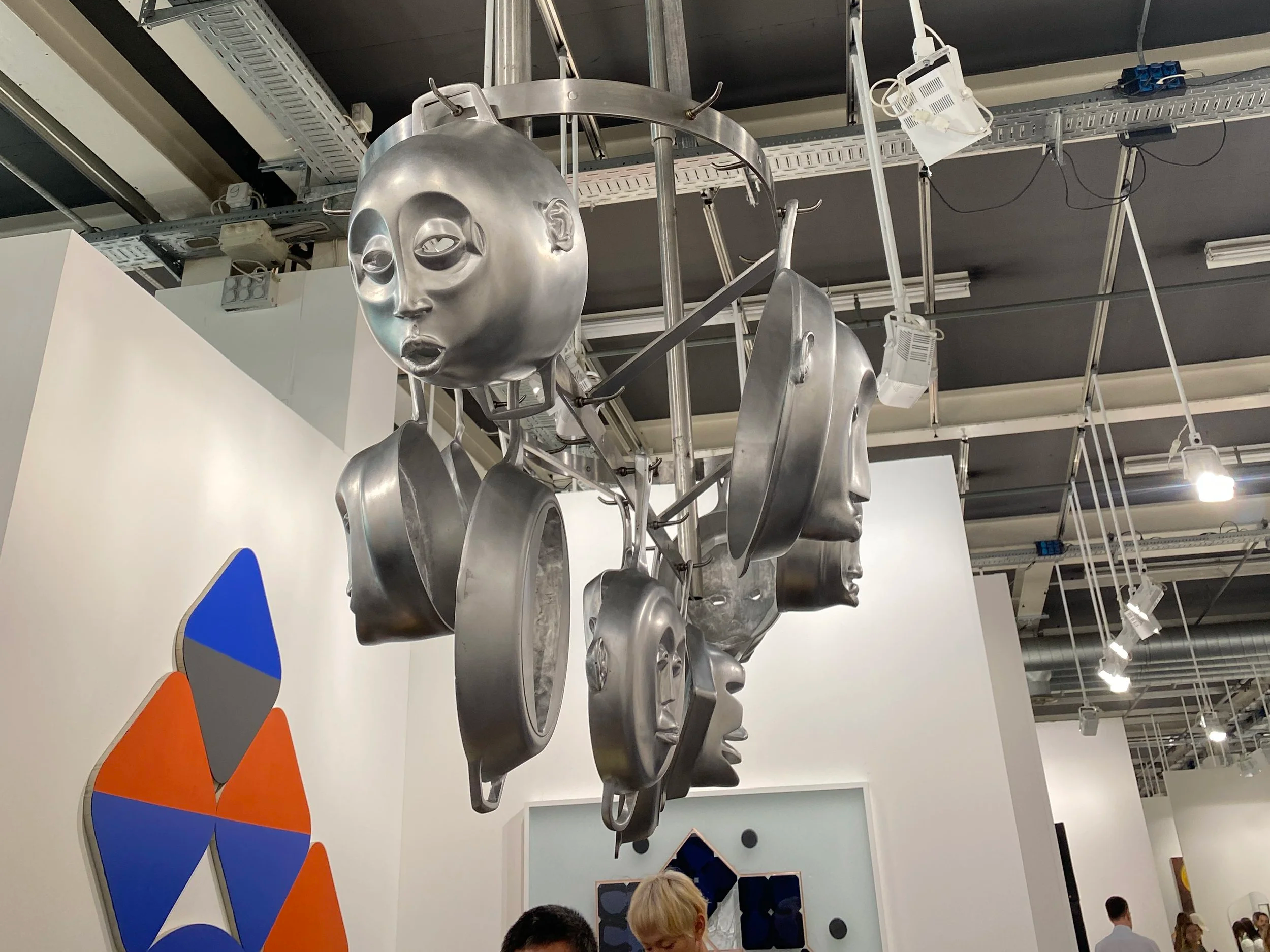
What fascinated me most was the choice of materials. These were ordinary kitchen pans, objects almost everyone would recognize. Yet Hayden had transformed them into something entirely different. They felt domestic and ceremonial all at once.
I stood underneath them for a long time. So much so the gallerist came over to discuss the work. Because the pieces hung overhead, you could experience them from different angles as you moved around the space. The shine of the metal was beautiful. The craftsmanship was extraordinary. I remember thinking I would have loved to take one home.
"I want my work to be expanded and that different people can see themselves in it or have some interaction with it. It can expose them to something they don't understand that's foreign and different."
In many ways, that's exactly how I experienced his work.
FAMILIAR YET MIND BENDING
One thing I appreciate about Hayden’s work is the world of tension he creates between familiarity and discomfort. His work often begins with objects we immediately recognize. Kitchen pans. School desks. Chairs. Houses. Then something shifts, the familiar suddenly becomes strange.
I've noticed this in other works of his as well. One installation I recall was of classroom chairs covered with wooden branches that left me with the same feeling. I wasn't entirely sure what I was looking at, but I couldn't stop looking.
His work usually leaves me with more questions than answers, and I think that's part of why I enjoy it so much.
His recent work at the Venice Biennale does exactly that. A seemingly traditional chapel was tilted forty degrees forward, creating something unsettling and slightly surreal. The lines between real and fake are blurred.
A LANGUAGE OF MATERIALS
Wood and metal appear repeatedly throughout Hayden's work. Trained as an architect, he approaches sculpture with both precision and imagination. You can tell that his background influences the way he thinks about space, structure and everyday objects.
"I do start with some level of it being autobiographical. Every person's decisions are a culmination of their life experiences up until that point."
Perhaps that's why his work feels so personal, even when it leaves room for multiple interpretations. What I appreciate most is that Hayden never tells viewers exactly what to think. Curiosity has always been where some of the most memorable art begins for me.
ABOUT THE ARTIST
Gerald Lovell was born in Chicago in 1992 and raised in Atlanta by Puerto Rican and African American parents. He began painting in grade school but started his professional journey in 2014. Now based in Brooklyn, New York, Lovell’s work has been shown in galleries and fairs worldwide, including New York, Los Angeles, Paris, London, and Basel.
His paintings come from a place of love, reflection, and memory. They offer a glimpse into Black life that feels intimate, conveying real moments that speak even when no words are said.
His subjects are living and reminds us of the beauty in that. Of the stories worth telling. And of the power in seeing ourselves, fully, on canvas.
It’s powerful and exactly what the culture needs.
WHERE TO FIND THE ARTIST
Follow on Instagram: (@huthhayden)
Tell us what you think of Hugh Hayden’s work? Or tell us about an artist you love.
Join the conversation, share in the comments!
You might also like these related articles: ARTISTS I LOVE: GERALD LOVELL