WEB SUMMIT: BEING BLACK IN TECH - PART 1: CHALLENGES AND OPPORTUNITIES
Explore the challenges and opportunities for Black professionals in the tech industry. Plus, what it will take to achieve racial equality in the space.
7 min READ
BEING BLACK IN TECH Part 1
WEB SUMMIT STATS
〰️
160+ countries
〰️
42% women
〰️
1000+ speakers
〰️
2300 startups
〰️
1000+ investors
〰️
340+ partners
〰️
71000+ attendees
WEB SUMMIT STATS 〰️ 160+ countries 〰️ 42% women 〰️ 1000+ speakers 〰️ 2300 startups 〰️ 1000+ investors 〰️ 340+ partners 〰️ 71000+ attendees
Last year I attended the global tech conference Web summit in Lisbon, Portugal. Summits like this one are great places for companies, presenters, and investors to meet each other and share ideas that are shaping the world around us. Some of the biggest tech companies and media outlets from 160 countries focusing on the future of technology like Web3 and AI were present. I have always been interested in the possibilities of digital and where it will take our society which is why I was so keen on attending.
Web Summit 2022, Centre stage
What struck me was how few black people were in attendance. This peeked my interest and gave me purpose at the summit. Now don’t get me wrong there was diversity in the array of speakers at the summit. What I was keen on finding out however was how minorities especially black and brown people are represented in the tech world. So, I combed through the conference’s 3-day schedule to find speakers and events which tackled just that. What a are the barriers of entry? Here are some of the takeways from this part 1 of a 2 part series.
BUILDING INCLUSIVE ECOSYSTEMS
The roundtable discussion hosted by Black Innovation Alliance, Building Inclusive Ecoystems examined how building inclusive ecosystems is crucial for creating a diverse and thriving tech industry that benefits the whole.
Tunji Fadiora, Manager Ecosystem & Experiential at BIA, Kunbi Tinuoye, Founder and CEO at Urbangeekz, Torin Brazzle, Executive Director and Founder at IGNITE!
The panel agreed that one of the main barriers to entry for people of color in tech is economical. Building a successful startup requires a lot of money. Without access to capital, many talented black founders are not able pursue their entrepreneurial dreams. That’s why it is important to identify who the connectors are within the community and create a supportive ecosystem that encourages collaboration and the sharing of resources.
A lack of community is also a major problem. People may be scared of working together or simply lack the resources to connect with other. Making it a huge hurtle to build a thriving ecosystem that fosters innovation and growth.
Access to capital is another crucial factor, particularly outside of major cities. In the wake of George Floyd's death, investments from VC firms for black founders has remained low. It is ever more crucial to identify alternative sources of funding, like angel investments and crowdfunding, to provide what is needed for them to truly succeed.
The panel concluded by agreeing that leveraging technology is essential. Without access to the latest tools and technologies, black people in tech risk falling behind. There is a need to ensure that they have access to the latest resources and support networks to help them succeed.
So, what can be done? First and foremost, it is important to close the relationship gap between founders and investors within the community. This requires building trust, transparency, and shared values.
They also said that removing barriers to entry and creating paths and opportunities for allyship is key. This means investing in training, mentorship, and support networks that will help black entrepreneurs succeed.
Finally the panel ended by saying that it is necessary to recognize that building inclusive ecosystems is an ongoing process that requires continuous effort and dedication. By prioritizing diversity and inclusion, we can create a thriving tech industry that benefits everyone.
IS THE ECONOMIC STRUCTURE OF TECH RACIST?
The Web Summit session, Is the Economic Structure of Tech Racist? brought together Kelly Burton, co-founder and CEO of Black Innovation Alliance and Veena Dubal Professor of Law at UC Hastings. Expertly moderated by Raina Kelley who is VP and Editor-in-Chief of Andscape a Black media platform dedicated to creating and highlighting the diverse stories of Black identity. They discussed the issues surrounding the venture capital world and the broader economic structures of technology.
Raina Kelley VP and Editor-in-Chief of Andscape, Kelly Burton, co-founder and CEO of Black Innovation Alliance and Veena Dubal Professor of Law at UC Hastings
Key takeaways from the conversation include the need to address the systemic inequities that exist within the venture capital space and the ways in which race gets talked about at the very bottom of the tech infrastructure.
Burton pointed out that the venture capital sphere is broken and that the current model prioritizes a very small few. While Dubal highlighted the need to build power elsewhere to push back on the current structures of power within the tech industry. This involves building labor movements, empowering entrepreneurs and innovators of color, and developing a policy agenda that brings these conversations to the streets.
One of the key issues highlighted in the conversation was the fact that less than 1% of venture capital goes to black founders, a number that has actually gone down even since the racial uprising. When asked, it was not necessarily agreed upon by Burton that the venture capital world is inherently racist. Burton noted that venture capitalists are however not anti-racist, as they are slow to respond to systemic inequities within the space. That the lack of diversity in the tech industry is a major issue. The data shows that diverse startups are more successful and that very data has not yet caused the venture capital community to change their behavior.
Web Summit 2022, Centre stage
The conversation led by Dubal looked at the broader economic structures of technology and the ways in which capitalism has changed since the 1970s to benefit primarily shareholders. Since the 2000s, there has been a shift towards data sale and surveillance, which has become the core of the business model of tech. To change these structures of power she said, there needs to be a shift in the current economic structures, involving power and profit sharing.
read the report
Do you work in tech and if so what are your experiences as a person of color (poc) or non-poc person?
Join the conversation, share in the comments!
You might also like this related article: WHY I HATE AND LOVE FASHION
GLAMPING: ONE WEEK IN AN ECO SURF RESORT
Find out what a sustainable eco surf resort looks like on the edge of Portugal.
3 MIN READ
PORTUGAL
Do you believe in happy mistakes? Well, that’s exactly what happened to me and a few friends on my last girls trip to Portugal. Following a brief stint in a disappointing Airbnb in the city center of Lisbon we mistakenly booked plan-b accommodations which was about 45 mins away from civilization. What we discovered would prove to be better than what we could ever hope for.
Enter Bukubaki Eco Surf, located on the westerly tip of Portugal, just breathing on to the Atlantic ocean. This is where surfers go to ride. The property is nestled in a lightly wooded pine and eucalyptus forest made up of luxury bungalows, treehouses and Canadian tents. To my pleasant surprise their philosophy is built upon a strong focus on nature, sustainability and resource efficiency.
You could feel a natural balance with its surroundings. A perfect place if you want to connect with yourself, land and sea. We felt so at peace and I was especially happy to be far away from the hustle and bustle of the city. The cozy accommodations were decorated with neutral earthy tones all made of natural materials.
We booked the Bungalows on the ground floor which had all the amenities including a dining room with kitchenette plus a terrace with loungers. We spent most of the evenings listening to music and chatting until late.
The nearest town is the quaint little town of Peniche where we visited the 16th-century seaside fortress, Fort of Peniche and Belem Tower.
I spent the days wandering around the resort watching the locals skate in the small skate park on the property. It was a great week with lots of bonding and fun. Unfortunately, on our last day we found out about one of the world’s largest oriental gardens in Europe the Buddha Eden Garden which was only a 20 min drive from the resort. I will definitely be returning just to see visit that.
Sustainability at bUkubaki
Recycling bins all over the property for sorting which guest could do themselves.
Environmentally friendly products at the reception.
Local and organic food at the canteen.
Water filling systems.
Use of recycled materials.
Energy efficiency with the use of photovoltaic and thermal energy.
Biosphere certified.
WHAT I WORE
Top and pant: ME. Keep Me Posted Staycation
Jacket: AMIÉ LEON DORE
Bag: “OLD” CÉLINE Cap: CELINE
Shoes - BIRKINSTOCKS
Rose Shades - NATHALIE BLANC PARIS
WHERE I STAYED
BUKUBAKI , Rua do Juncal 6Casais de Mestre Mendo, Atouguia da Baleia 2525-331, PORTUGAL
IG: bukubaki
Do you ever consider how eco friendly or sustainable your hotel or resort is? Do you pay attention to these things while on vacation/holiday?
Join the conversation, share in the comments!
You might also like this related article: I KNOW WHAT YOU DID LAST SUMMER: MYKONOS
ARTISTS I LOVE: ZANDILE TSHABALALA
Let me introduce you to young South African artist Zandile Tshabalala as we look at works from her latest exhibiton.
3 MIN READ
I love finding new artists like emerging South African born Zandile Tshabalala. Her work explores figurative themes, particularly the representation of black women and how they navigate history which is why I was immediately drawn. I was thrilled when I found out that one of her paintings would be on show at Art Basel 2022. I darted straight to Galerie Nagel Drexler’s booth to see her piece My mother’s garden: Umcimbi I (A Gathering I), (2022).
Lovers in a secret place, 2022, Acrylic on Canvas, 300cm x 200cm
In her latest exhibition “Lovers in a secret place”, Tshabalala taps into her own experiences of finding love and of heart break which is universal. Her standout piece “Lovers in a secret place” depicts a black woman lounging on a chaise long donned in a powder pink pajama accented with feathers, magenta heels and all things considered feminine like red painted nails and lips. Tshabalala’s protagonists usually take center stage in her work. The heroin in this piece although she leers at you with resignation of a love lost grips the leaf of a monstera deliciosa. A plant in the language of flowers represent deep relationships sometimes also symbolizing suffocation. Just as she seems to be suffocating the pillow with her stretched legs.
The Embrace, 2022, Acrylic on Canvas, 150cm x 150cm
Sweetest love, 2022, Acrylic on Canvas, 150cm x 150cm
I love Tshabalala’s use of negative space which draws in the viewer to the heroin, as seen in her other two pieces The Embrace and Sweetest love. Again, accenting them with either a red lip, red nails and sometimes both. Tshabalala’s secret dreamscapes are so effective in creating an intimacy and delicacy. Using the paint stokes of the plant leaves, feathers, furs and accents to unwittingly draw you in deeper into the darkness or “blackness” of her central figures. It’s extraordinary!
ABOUT THE ARTIST
Zandile Tshabalala studied at the University of the Witwatersrand in South Africa. She has shown her work in the UK and Ghana. The artist who currently works in Johannesburg, describes herself as a young woman from Soweto raised by women and who is interested in the lives of women around her. Her work is centered around minorities and how versatile they are. How versatile we are!
Tshabalala’s work often depicts the vulnerability of the black nude body presenting them in an empowering manner thus showing that we can indeed be soft. Contrary to being hard which I too have been criticized for as a black woman. Revealing the other side of the coin of the gender based violent society that black women live in today. Her work resonates with me on all of these levels. Exceptionally powerful stuff.
“When I look at my work I feel very proud to see that I’m evolving towards the woman I’d like to be one canvas at a time.”
The artist herself celebrates and does not shy away from her own femininity which is what struck me when I found her online. She embodies a new kind of artist, representing the extraordinary new talent coming out of the African.
WHERE TO FIND THE ARTIST
Follow on Instagram: zandiletshabalala_
Tell us what you think of Zandile Tshabalala’s work. Or tell us about an artist you love.
Join the conversation, share in the comments!
You might also like these related articles: ARTISTS I LOVE: JORDAN CASTEEL, ARTISTS I LOVE: AYANFE OLARINDE
WHY I STOPPED DRINKING: PART 1 (THE PHYSICAL)
Join me in self discovery on my journey to quitting alcohol.
7 min READ
part1 of a 3 part series
My first love was vodka then she eventually betrayed me. She helped me inhibit myself, she gave me courage until she dropped me for a much younger model or should I say liver.
So, I turned to my second love, rum, she is a distant cousin from the Caribbean. She always made me feel warm and fuzzy inside and gave me courage. She just like tequila stood by my side until the day came that I decided to quit them all including my other loves red wine and champagne.
This year marks almost three years that my extended break from drinking alcohol continues. I am going to share with you in this part 1 of a 3 series on my journey giving up alcohol. Beginning with the physical journey, part 2 the emotional journey then part 3 will be the spiritual one. All of the journeys involve personal growth and development and I hope they will inspire you if you have ever thought of giving it up as well.
LET’S Take a break
If you would have told me five years ago that I would be writing this, I would have told you to get outta here. I loved drinking whether it was socially and antisocially.
Like many people during the pandemic, I gave up drinking. which made it easier as there was no societal pressures or questions like are you pregnant. But this journey began long before the pandemic. One evening while scrolling aimlessly through my Facebook feed, I stumbled upon a friend's post who gleefully gloated about being one year alcohol free. Now by no means was she an excessive drinker (nor was I) however for as much as I scoffed at the idea of giving up drinking, deep down inside I was intrigued.
I never thought in a million years that I would ever give up drinking, but it all started in 2021 when I had my last glass of white wine. The world opened back up during a brief respite from the pandemic and I went for a lake side drink with colleagues. As per usual I ordered a glass of wine, had a few sips and felt awful which led me to committing to one of those infamous dry months. However, this particular dry month went on for a few more months which cascaded into a year. Then the break never ended.
why WE broke up
You see, I loved drinking and I wore my alcohol consumption like a badge of honor. Because of this, I was able to overcome my introversion and become the life of the party. However, in my late twenties, I realized that my body had lost its taste for Vodka as I mentioned earlier one of my first loves. I started getting physically ill, so I decided to simply stop having it. Worse yet, as time went on, the same discomfort began manifesting itself with other spirits which I ignored. My body was politely or impolitely telling me that it had had enough.
The effects of alcohol on the body differ not just with how much is ingested, but also with an individual's tolerance level and how long they've been drinking. Facts that I was unaware of at the time.
To be honest I was sick of feeling sick in the name of being “more interesting”. Was it really doing the trick? After a while it simply was not. Late nights and hangovers were becoming increasingly insufferable. It was affecting my productivity, my mood and my overall health. I wanted to show up for myself as my most optimal version and alcohol was not part of that equation. I had decided that enough was enough, that I wanted to live a healthier lifestyle. Once this clicked, continuing the dry months became easier as the next year rolled around.
WHAT I’VE NOTICED
After about six months I noticed that the quality of my sleep vastly improved! My circadian rhythm, that’s the natural, internal process that regulates the sleep–wake cycle and repeats roughly every 24 hours, was thankful at last. I also started getting more compliments on my skin which started to appear brighter and more refreshed. My weight stabilized and my focus became much sharper, probably due in part due to the better sleep I was getting. And one of the other major improvements was my immune system. Even after the pandemic I noticed that in conjunction with my vitamin supplements and clean eating (as best that I can) my immune system was at its peak performance!
Once I started seeing and feeling the benefits to my physical health, going back to alcohol was not an option. I am now obsessed with this new feeling and I don’t want to go back. In other words, the pros are stacking up!
Those are just some of the benefits that I have noticed and there is probably so much more that I don’t even realize is happing within me. I would be remis if I didn’t say that this is my experience, and that alcohol affects each person differently. Some people may be more sensitive to its effects than others. So, rule of thumb is drink in moderation or not at all.
Stay tuned for part 2 where I go into the emotional side of my journey. How I started to understand my relationship to alcohol and how I managed the societal pressures associated with abstinence.
Did you give up alcohol or are thinking about it?
Join the conversation, tell us about your experience in the comments!
You might also like this related article: BEHIND THE WOMAN
ONE DAY IN: ABU DHABI
Come along with me for a day in Abu Dhabi that will leave you speechless.
5 MIN READ
THE PERSIAN GULF
Abu Dhabi is an island in the Persian (Arabian) Gulf located off the coast of the United Arab Emirates. The city's claim to fame is the oil sector, as well as the Formula 1 Etihad Airways Abu Dhabi Grand Prix, which is held towards the end of the year. The city is also known for its commerce as reflected by the skyline’s modern towers and shopping mega centers like the Abu Dhabi and Marina malls. I had no idea what was to come, but I was happy to see this part of the world for the first time. I managed to sandwich ten hours into my three-day trip to Dubai, here’s what happened.Knowing that I intended to visit the Sheikh Zayed Grand Mosque, the first thing I did was go to the souk in Dubai the day before in order to buy the proper attire for entry. If you don’t know, a souk is a marketplace usually found in northern Africa or the Middle East. This part of the world is modest, so I made sure to have head and shoulder coverings for my visits. This was a welcome change to a lot of destinations I’ve been to, where skin is in.I set off at 10 a.m. for a 1.5-hour trip with my fantastic guide Abdul from India, who was eager to show the city off. As we approached, I was surprised by how serene it was, despite the jaw-dropping skyscrapers. I mean, even as a big city kid from New York like me was blown away. This is where architects come to have fun I thought!Our first stop was the Louvre Abu Dhabi described as "France’s largest cultural project abroad." Located on Saadiyat Island the museum, inauguration in 2017 (despite some earlier opposition in France and Human Rights violations) is a sister of the famed Louvre Museum in Paris. The structure's super-sized Arabic-inspired canopy, designed by architect Jean Nouvel, is a piece of art in and of itself.I really enjoyed the curation of the permanent gallery which was smooth and easy to get through. The collection showcased the juxtaposition of different civilizations spanning thousands of years into modern times.
The Emirates Palace, with its majestic entry stairs and flat fountains facing the unusual Etihad Towers, was our next visit. The palace was massive, with a mix of Islamic architectural features and contemporary design.We then continued on to the presidential palace, Qasr Al Watan. This was a sight to behold, so opulent! The palace was solely used for formal functions, like receiving foreign leaders and sessions of the country's supreme council and federal cabinet. But today lucky for us is open to the public.Our next destination, Sheikh Zayed Grand Mosque, was one I was really thrilled about and rushed our guide to get there before sundown. One of the world's largest mosques and one of the first I've ever had the pleasure of seeing. Getting to the actual entrance of the mosque was quite a trip filled with a series of walking escalators. It was amazing when we arrived, an architectural wonder that brilliantly mixes Islamic architecture and design. The inner courtyard is enormous, with minarets and elaborate and exquisite flower mosaic decorations on the floor. Image: Thais Cordeiro
I knew from previous images that I had chosen the right green abaya (a loose-fitting robe worn around the body to cover everything except the face, hands, and feet) and hijab (a headscarf that covers the head and shoulders) to contrast with the eggshell white of my surroundings. When inside beneath the white-marble domes, the mosque features an immense Persian carpet with crystal chandeliers as far as the eye can see. It was spectacular. If you're in Abu Dhabi, this is a must-see.As darkness fell, the ponds along the arcades reflected the mosque's columns, lighting the entire scene. I said a prayer for a friend and goodbye to this magnificent work of art.WHAT I WORE
Jade Abaya - Al DAGHAYA ST. DUBAIBlack silk skirt - REDLEY EXANTUS.Black Leggings - WOLFORDShades - SAINT LAURENTFuchsia Sandals - VINCENZO FERRARAHave you ever been to the Middle East or ever wondered about it? Share in the comments!You might also like these related articles: I KNOW WHAT YOU DID LAST SUMMER: PARIS, I KNOW WHAT YOU DID LAST SUMMER: SPAINARTISTS I LOVE: JORDAN CASTEEL
Let's take a look at some of Jordan Casteel's best work together as we learn more about the artist and her extraordinary process.
5 MIN READ
Twins (Subway), 2018.Photo: Jason Wyche. Twins (Subway), 2018. Oil on canvas, 56″ x 72.″ Images courtesy of the artist and Casey Kaplan, New York.
When I first saw Twins, a painting by African American contemporary artist Jordan Casteel, I was immediately transported back to the hours I spent as a child riding the train with my mother in New York City. We would frequently take the dingy subway for a 45-minute ride all the way to Brooklyn to see my uncle in Flatbush. The journey seemed to last an eternity. What saved me was waiting for that moment shortly after crossing the Brooklyn Bridge to see what fresh graffiti tag might appear in a long stretch of the tunnel.Twins displays two weary siblings napping on their mother's lap after a hard day at school. Despite the crop of the painting, I knew they were on a New York City subway car based on how they were leaning in and the trademark orange chairs. Again, because I, too, had been that kid.Casteel captures an intimate moment in what could otherwise be a chaotic busy situation. This, in my opinion, is the brilliance of her Subway series.SUBWAY SERIES
The subway series really resonates with me as the paintings bring me a sense of nostalgia. I have lived abroad for almost 20 years and when I look at these paintings the artist brings me right to those moments.Casteel’s process consists first of taking a picture of her subject then paints them. Using photography (where lighting is sometimes bad as she admits) only to remember.Her cropped style in this series, she says are a curiosity of form and light – junctures and the points of contact. A play on what we want to see and what we actually see drawing the viewer into the intimacy with the subject.She captures the essence of the person held within the frame of their outline and social landscape. An expression of her experience of the environment and the light of her time with the subject. These works are so fresh, unique and vibrant. Her use of color is astonishing, expertly playing with light, fabric folds creating warmth in a flat generic subway car. Capturing this juxtaposition is fascinating and I think this is what makes these painting so profound.ABOUT THE ARTIST
The native of Denver, Colorado, began her studies in sociology and anthropology before earning a Master of Fine Arts in Painting and Printmaking from Yale University. Her solo exhibitions have largely taken place in New York, where she currently lives and works, and she recently exhibited a collection of portraits, still lifes, and landscapes at the Massimo De Carlo gallery in London.American Vogue invited her to create the artwork for the coveted "September Issue" in 2020. Joining an exclusive group of just a few artists in doing so.According to Casteel, her work comprises of social landscapes that amplify voices of people. She is passionate about social justice and community engagement, and she strives to be involved in the world through her work.“This is the way that I speak to the world. And this is the way I’ve been speaking to the world and talking about the humanity of our people, talking about humanity in general. It’s a really profound experience. I do think I’m participating and a change is happening.”
In my opinion, Casteel is an important voice for this generation of black American artists. Her art speaks to me, to my experience, to my people, to our challenges and to our hope.WHERE TO FIND THE ARTIST
Find out more about - WWW.JORDANCASTEEL.COMFollow on Instagram: @jordanmcasteelSee Jordan Casteel’s Vogue cover: VOGUE MAGAZINETell us what you think of Jordan Casteel’s subway series. Or tell us about an artist you love. Share in the comments!You might also like these related articles: ARTISTS I LOVE: AYANFE OLARINDE , ARTISTS I LOVE: KADIR NELSONI KNOW WHAT YOU DID LAST SUMMER: NEW YORK CITY
Take advantage of my insider knowledge of New York City, the pIace I call home.
3.5. MIN READ
HOMECOMING
I've been living overseas for nearly 20 years, and every opportunity to return home to see friends and family in New York City, is always a privilege. Being away for so long turns you into a cross between a tourist and a townie. It's still amusing to me when people ask for recommendations. As you may know New York City is forever evolving and shifting at maximum speed. So that's why I always add a disclaimer, that my tips are my own guilty pleasures. Let me fill you in on what I do when I visit. New places I've found as well as my favorite go-to spots that will never run their course. Come with me!LOWER EASTSIDE & SOHO
This time, I chose to stay in the Lower Eastside, popularly known as the LES, an area that has changed since I was a child and has experienced a dramatic gentrification since the mid-2000s. Historically it is an immigrant and working-class neighborhood. I reserved a stay at the ultra-hip Ludlow Hotel. Also well-known for their luxurious bathrooms, which have served as a backdrop for incredible content creation by many an influencer. Most rooms offer a balcony with beautiful city views.What's nice about this neighborhood is there are so many places to eat, like Sweet Chic for fried chicken and waffles, and the night life is on point if you like bar hopping. I always squeeze in a Pilates sesh at New York Pilatesin the morning then hit up Miss Lily’s in Soho for a Jamaican breakfast. Or head uptown to Rose Bakery , Japanese fashion designer Rei Kawakubo’s multi-level concept store Dover Street Market where when I was there a few years ago I snagged my coveted Telfar bag.BROOKLYN
When I'm in town, I normally go to Williamsburg, Brooklyn, to see my long-time friend Lynda. If I'm lucky, she'll carve out some time from her work schedule, running her own photography and digital video agency Eiger. We usually meet at our fav coffee shop, Depanneur, for croissants and coffee in the sun while catching up. It's a great spot for people watching! Never missing a chance to walk around taking in the ambiance, street art and Manhattan skyline views at Grand Ferry Park. I’ve seen this neighborhood really transform in the past decade, but it still holds its charm with tones of local vintage shops, dive bars and food trucks.These are just a few of the things I like to do and places I go when I am back home. Stay tuned for more posts about my spots if you love New York as much as I do. I’ll be sure to take notes and share more of my gems with youWHAT I WORE
Black tank top - CELINEBlack tube skirt - WARDROBE.NYCSnake print silk dress - ZIMMERMANNBlue floral dress - IRO PARISSunglasses - NATHALIE BLANC PARISAll other jewelry - Family keepsakesWHERE I WENT
GRAND FERRY PARKNEW YORK PILATESWHERE I STAYED
LUDLOW HOTEL, 180 Ludlow Street (btwn Houston + Stanton), NY, NY, 10002WHERE I ATE
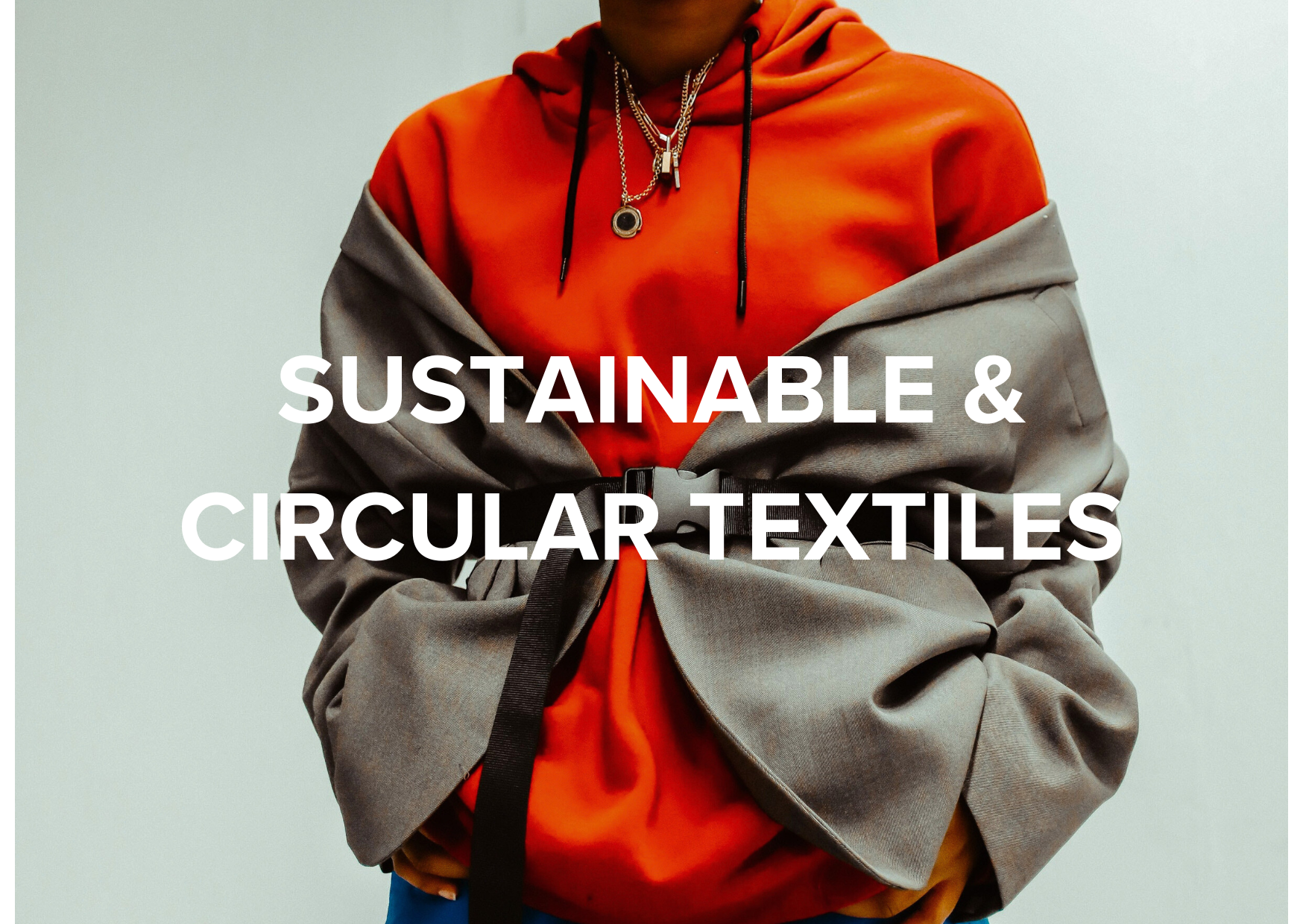
MISS LILY'S, Avenue A, NY, NY 10009SWEET CHIC, 178 Ludlow Street, NY, NY 10002ROSE CAFE, Dover Street Market, 160 Lexington Avenue, NY, NY 10016DÉPANNEUR, 242 Wythe Ave, Brooklyn, NY 11249Tell us where you like to go and do when you’re in NYC or better yet your own hometown. Share in the comments!You might also like this related article: I KNOW WHAT YOU DID LAST SUMMER: PARISGREEN IS THE NEW BLACK: SUSTAINABLE AND CIRCULAR TEXTILES
Find out how the EU aims to make sustainable fashion the new black.
5 MIN READ
Image: Daniel Adesina
If you know me, I always say, do what you can when it comes to conscious living. However we can only do but so much and it can often feel like the burden is usually placed on us, the consumer. That’s why the latest news coming out of the European Union (EU) concerning Sustainable and Circular Textiles is really interesting and undoubtedly a start to changing this view.Early this year the European Union`s Strategy for Sustainable and Circular Textile was released. The proposal sets out to combat fast fashion, textile waste and the destruction of unsold textiles. A new strategy was devised to make textiles more durable, repairable, reusable and recyclable, to ensure that the manufacturing takes place in full respect of social rights. In addition to its target that by 2030 textile products sold in the EU should be long-lasting, recyclable, and free of harmful ingredients and created in harmony with social and environmental rights. This is a really big deal as it is one of the most ambitious commitments made by a collective of governments in the fashion and textile industry. Certainly something many have been craving for a long time.Image: EU Factsheet
Image: EU Factsheet
Measures include eco-design requirements for textiles, clearer information, a Digital Product Passport and a mandatory EU extended producer responsibility scheme, measures to tackle the unintentional release of microplastics from textiles, greenwashing, plus a boost to circular business models, including reuse and repair services. To make a long story short they want to make sustainable products the norm throughout Europe.If you didn't already know, the textile industry is one of the top five greenhouse gas emitters in the world and needs a tremendous amount of resource and water. Which is why the alarm bells are ringing for governments to start acting. Image: EU Factsheet
Image: EU Factsheet
THE CRITICS HAVE SPOKEN
The approach has been criticized for not being ambitious enough. That the strategy is not tough enough on the impacts of e-commerce, human rights, unfair trading practices among other issues. One commenter on the European Commission’s Instagram page asked,How will companies make money if they plan on "making fast fashion go out of fashion"? Why don't they give subsidies to companies that produce locally instead?
The Commission replied that they will rely on engagement in the reuse and repair sector and adopt favorable taxation. Is this enough? Especially when Europe has a trash waste crisis? Think Ghana environmental disaster fueled by used clothes and fast fashion. In my view as I stated in my post about The Fashion Pact this is certainly the step in the right direction. I too agree that the strategy could be more ambitious but awakening a long-sleeping beast will not be simple. Mobilizing and coordination of all the nations within the EU to reach this target will be slow. The EU may not reach its 2030 target but then again targets are just that targets. They may or may not be met but the idea is to “aim” towards a goal. What we will see thanks to this strategy is countries outside of the EU also adopting similar strategies and legislation.In one of my earlier posts I mentioned that brands need to be more purpose-driven demonstrating that their core values go beyond making a quick buck. Whenever I find a brand that I am interested in spending my money with, I not only see what they have on offer but also look to see how responsible they are in their activities. This is one of the criteria’s that can tip the scale of whether I shop with them or not. This goes back to my point of making more responsible consumption choices. This space will be forever changing as we seek to redefine “Sustainable Fashion”.THE GLOBAL PICTURE: TEXTILES
Textiles production doubled between 2000 and 2015
One full truckload of textiles goes to landfill or incineration every second
1% of material used to produce clothing is recycled into new clothing
Up to 35% of all microplastics released into the environment can be traced back to textile products
(Source: EU Factsheet on Textiles)
Do you agree that clothing should be made to last longer? How do you dispose of clothes you no longer want to wear? Share in the comments!You might also like this related article: ALL YOU NEED TO KNOW ABOUT: THE FASHION PACTLET'S GET NERDY: BIOMATERIALS AND FASHION
Get your hands on a report that has established a common language for biomaterials that could revolutionize what we wear.
3.5 MIN READ
Image: PURA materials, by Magu
Today the textile industry uses large amounts of raw materials in its production. Plastic remains toxic and is considered a relic to many which makes the starting point already wrong when it comes to textile.Micro plastics leach from our washing machines every time we wash out synthetics. Not to mention, consumers have become increasingly concerned about the environmental and social effect of their purchases, now more than ever companies are looking for more “sustainable” solutions.With pressure mounting on the textile and fashion industry to move to a more circular model, textile innovations need a boost. Enter biomaterials.In 2020 I attended the launch of an exciting and enormously important report called Understanding “Bio” Materials Innovations. I will share with you why this is a significant achievement for the future of fashion and innovation in textiles. The report is a first for the fashion industry and its aim is to take away the confusion around what can be considered or labelled as a biomaterial. Courtesy of Biofabricate and Fashion for Good
What the heck are biomaterials?Well, that is not an easy question to answer. According to the report this and “… other questions, represent a widespread ignorance in relation to biomaterials not just on the part of consumers, but by fashion brands and even some material innovators themselves.” To put it plainly biomaterials are materials made in a lab using living cells and microorganism. Courtesy of Biofabricate and Fashion for Good
A NEW GENERATION OF TEXTILE MATERIALS
Biofabricate (an organization who is driving sustainable biomaterial innovation for the global community of startups, brands, and investors) and Fashion for good fund (an organization that bring together the entire fashion ecosystem through their Innovation Platform) teamed up to create this “first of its kind” reference document for brands and the fashion community defining the different types of Biomaterials and processes. The report also does a great job of clearly classifying all the “bios” if you will. Then breaks down the nuances and their interconnectivity.They understood that in order for there to be true growth (no pun intended) in the sector there needed to be first a mutual language. The report goes into detail and explains things in a way so that everyone gets it. Like for example how a material is made and what it is used for.Because biomaterials have a long research & development time and a long journey from lab to supply chain this report is the first step of creating a vocabulary to have a true conversation within the industry. This is a huge leap forward which never before existed.When the day comes when these materials will be available to the market, this report will help in classifying these new materials and communicating these to us, the consumers.We have a long way ahead of us though and there are many challenges before we see these textiles in our closets. Some of those challenges include investment and capital for start-ups. Supply-chain and equipment. Nevertheless the future is here.WHERE TO READ
The report - Understanding "Bio" Material InnovationWould you wear something made of material created in a lab? Share in the comments!You might also like this related article: IS SUSTAINABILITY IN FASHION?WORK FROM HOME STYLE: MELODY ESHANI
Discover my latest work from home fit by Iranian L.A. born designer Melody Ehsani.
4.5 MIN READ
“Stop waiting to be who you already are”
Stop waiting to be who you already is what I found etched on the back of the label on one of my favorite work from home fits by second generation Iranian LA born designer Melody Ehsani.The look is a two piece, top and pant made of breathable rayon in a glorious cobalt, my favorite color. The top is a traditional short sleeve men’s leisure shirt with a collar and front breast pocket reminiscent of the 1950’s. The pant is a wide straight leg with elastic waistband. All inspired by the Latino subculture that originated in Los Angeles.The most captivating part is her custom paisleys bandana print which feature the iconic ME. emblems: cherries, roses, evil eye, and butterflies. The fit is so relaxed it keeps me in that mood all day while I work. As if I’m wearing a really dope pair of pajamas but not. If I need to make a quick dash out, I can just slip on my kicks and I’m good. Not to mention, the handwritten text that swirls into the print, “I See you” and “My resources are endless” reminding me that I got this. By far one of the coolest work-from-home fits I own and will keep for a long time.I can’t remember when or how I found her brand ME. but what I do recall is falling in love with not only her streetwear style but also what she stands for: women empowerment, social justice, and community among other things. What resonates is the infusion of conscious thought into her products. She declares that they are there to remind the wearer of who they are and to do the things that they love. A dope reminder!Like Ehsani I too am a first generation American who listened to hip hop growing up and was influenced by two sides of a culture. I also lost my father at a you age same as her and bared the weight of duty or following your passion. Which is why in 2004 she dropped out of law school to launch her eponymous label, created to inspire, and empower, making jewelry, footwear, and clothing with purpose. ABOUT THE BRAND
ME. is the first woman owned store in the dynamic Fairfax streetwear district in Los Angles. Ehsani said that she wanted a store with a purpose rather than just a retail spot. A place where she could engage with her customers in a different way and provide a platform for likeminded people to create a sense of community around the store. So, she created a “Speaker Series” every month where they discussed topics like sex education, politics, and racism. I once had the chance to shop at the New York City location which due to the pandemic has now closed. There was such a vibe in the space, from the displays, the lighting, the music, and the shop associates. It was just a really cool vibe. Her mission is to inspire other creative women to follow their divine blueprint, with the hope that they can enact change through design. I have to say, I’m inspired.The brand has gone on to launch a series of successful collaborations with Jordan Brand, Lauryn Hill, Wu Tang Clan, Reebok to name a few.In March of 2021 she was tapped by Footlocker as the new Creative Director for their women's business where she is designing quarterly apparel capsule collections which I am sure are selling out just like her splashy Jordans, so keep make sure you keep an eye out for that!Courtesy: @melodyehsanishop
WHAT I WORE
Top and pant: ME. BANDANA STAYCATION - ROYAL BLUERings: MELODY EHSANIKicks: AIR 1 MID - SNEAKER HIGH BLACK/PINE GREEN/WHITE/GYM REDAll other jewelry - Family keepsakesFOLLOW THE BRAND
Shop Melody Ehsani: WWW.MELODYEHSANI.COMInstagram: @melodyehsanishopBrick and Mortar: LOS ANGELES FLAGSHIP IN FAIRFAXTell us about your work from home style and what brands you have found that make you feel at home. Share in the comments!You might also like this related article: Work from home style: Helmer